
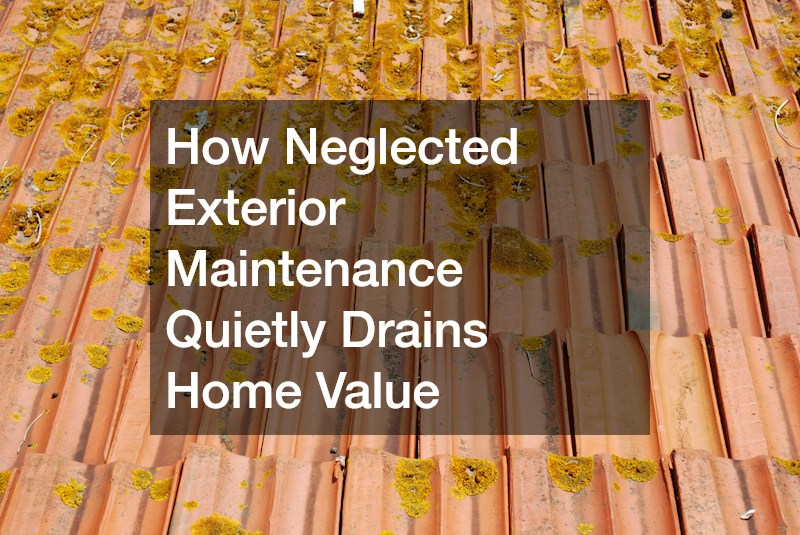
Your home’s exterior works quietly in the background every day, shielding your investment from sun, rain, wind, and temperature swings. When small issues like peeling paint, clogged gutters, or a struggling HVAC unit go unaddressed, they rarely announce themselves with a dramatic failure. Instead, they chip away at your home’s value a little at a time, until an appraisal or inspection reveals the cumulative damage. Understanding where neglect does the most harm can help you protect your equity before small problems become expensive repairs.
Faded and Damaged Siding

Siding is one of the first things buyers and appraisers notice, and it is also one of the most expensive systems to replace if neglect goes on too long. Cracked, warped, or discolored siding signals water intrusion risk, which can scare off buyers before they even step inside. Left unchecked, moisture behind siding panels can rot sheathing and framing, turning a cosmetic fix into a structural one.
Many homeowners wait until damage is visible from the street, but problems often start underneath, where they are harder to spot. Bringing in siding contractors for a periodic inspection can catch loose panels, failing caulk, or trapped moisture before it spreads. A professional assessment every few years is far cheaper than discovering rot during a home sale inspection.
- Check for warping, bubbling, or color fading after harsh seasons
- Look for soft spots near windows and doors, common entry points for moisture
- Reseal gaps and seams annually to keep water out
- Address small cracks before winter freeze-thaw cycles widen them
Clogged Gutters and Poor Drainage
Gutters are easy to ignore because they sit above eye level, but when they clog with leaves and debris, water has nowhere to go but down the exterior walls and into the foundation. A single inch of rain on an average roof can produce over 600 gallons of runoff, and when gutters can’t channel that volume away, it spills over the sides and pools right at the base of the house. Over time, this causes staining on siding, mildew and mold growth, and even foundation settling or cracking, all of which lower a home’s appraised value. Basement leaks and crawl space moisture tied to poor drainage are especially costly red flags during an inspection, since they signal deeper structural concerns to buyers and appraisers alike. Downspouts matter just as much as the gutters themselves. They should extend at least four to six feet away from the foundation, and the ground should slope away from the house at roughly a quarter-inch per foot to keep water moving in the right direction. A simple twice-a-year cleaning schedule, ideally in spring and late fall, prevents most of this damage. Homes surrounded by mature trees may need a mid-season check as well, and installing gutter guards can cut down on debris buildup between cleanings.
Downspouts should direct water at least three to five feet away from the foundation. If you notice pooling near the base of your home after rain, that is a sign your drainage system needs attention before it undermines your landscaping or basement walls. Clogged gutters compound this problem by forcing water over the edges instead of through the downspouts where it belongs. Leaves, twigs, and granules from aging shingles build up quickly in the fall and spring, and a gutter that’s even half-blocked can send water cascading down siding and pooling at the base of your home. Over time, that overflow can stain exterior walls, rot fascia boards, and create the perfect damp conditions for mold and wood-destroying insects. The fix isn’t just cleaning gutters twice a year, though that matters. Check that extensions or splash blocks are actually moving water away from the house, since many are knocked loose by lawn equipment or storms and quietly stop working. Grading matters too: the soil around your foundation should slope away from the house at roughly a quarter-inch per foot for at least six feet. Left unaddressed, poor drainage doesn’t just cost money in repairs. It’s one of the first things a home inspector flags, and visible foundation cracks or basement water stains can scare off buyers or trigger price negotiations long before anyone discusses a formal repair estimate.
- Clean gutters in spring and fall at minimum, or quarterly if you live near heavy tree cover
- Install gutter guards to reduce debris buildup, but still inspect yearly since fine grit and seed pods can slip through
- Extend downspouts at least 4-6 feet away from the foundation to prevent basement seepage and soil erosion
- Check for sagging sections that trap water and add weight, often caused by loose hangers spaced too far apart
- Watch for water stains or peeling paint beneath gutter seams, a sign of slow leaks that erode siding and trim over time
- Grade soil near the foundation so it slopes away from the house, giving water somewhere to go besides pooling at the base
Cracked Driveways and Walkways
Concrete and asphalt surfaces take a beating from temperature swings, vehicle weight, and shifting soil. Hairline cracks might seem harmless, but they widen over time and allow water to seep underneath, accelerating heaving and crumbling. A driveway in poor condition is one of the first things a potential buyer judges, often before they even reach the front door.
Sealing cracks within the first year they appear keeps repair costs low and prevents larger sections from breaking apart. Ignoring the problem for several seasons usually means a full resurfacing or replacement, which is a far bigger investment than routine maintenance.
- Seal small cracks promptly to prevent water infiltration
- Reseal asphalt driveways every two to three years
- Watch for uneven settling near drainage paths
- Repair walkway trip hazards quickly to avoid liability concerns
Aging Outdoor Living Spaces
Decks and patios are major value drivers for resale, but they are also exposed to constant weather stress. Wood decking that is left unsealed or unstained will gray, splinter, and eventually weaken at the joints, creating safety hazards as well as cosmetic problems. Buyers often view a tired deck as a sign that other maintenance throughout the home has been skipped too.
Many homeowners are shifting toward composite decking because it resists rot, insects, and fading far longer than traditional wood, reducing the ongoing upkeep burden. Even composite materials benefit from periodic cleaning to remove mold or algae, but they do not require the sanding and resealing that wood decking demands every couple of years. This durability can be a selling point when it comes time to list your home.
- Inspect deck boards and railings annually for soft or loose spots
- Clean composite surfaces with mild soap and water twice a year
- Check fasteners and support posts for rust or rot
- Reseal wood decking every one to two years depending on climate
Neglected Roof Flashing and Shingles
Roofing problems rarely start as leaks inside the house; they usually begin with small flashing gaps or missing shingles that go unnoticed from the ground. Once water finds its way under a damaged shingle, it can travel along the roof deck and show up as a stain far from the original entry point. This makes roof neglect particularly sneaky, since the visible damage often appears long after the real problem started.
A roof in poor condition is one of the biggest red flags during a home appraisal, since replacement costs are high and timelines are tight for buyers using financing. Annual inspections, especially after major storms, help catch minor issues before they become expensive structural repairs.
- Check flashing around chimneys, vents, and skylights each spring
- Replace cracked or curling shingles as soon as they are noticed
- Clear moss and debris that trap moisture against the roof
- Schedule a professional inspection after severe weather events
Overlooked HVAC Exterior Units

The outdoor condenser unit for your cooling system is often tucked against the side of the house and forgotten until it stops working properly. Dirt, grass clippings, and overgrown shrubs can restrict airflow, forcing the system to work harder and wear out faster. This not only shortens the equipment’s lifespan but can also become a point of concern during a home inspection.
Scheduling routine air conditioning repair and maintenance keeps the unit running efficiently and gives you a record of upkeep that reassures future buyers. A well-documented service history for AC repair work can actually support a stronger asking price, since it signals the major systems have been cared for rather than patched together at the last minute.
- Clear a two-foot radius around the unit of debris and vegetation
- Replace air filters regularly to reduce strain on the system
- Have a professional check refrigerant levels and coils annually
- Keep service records as proof of consistent maintenance
Peeling Paint and Trim Damage
Paint does more than make a home look fresh; it acts as a protective barrier against moisture, insects, and UV damage. When paint starts peeling or trim begins to crack, it exposes the underlying wood or composite material to the elements, accelerating decay. This is one of the most visible signs of neglect and one that buyers notice immediately during a drive-by.
Touching up high-exposure areas like south-facing walls and window trim every few years prevents the need for a full repaint sooner than necessary. Catching peeling early also protects against pest intrusion, since insects are drawn to softened, moisture-damaged wood.
- Repaint or touch up trim every three to five years depending on exposure
- Inspect window and door frames for soft or cracked wood
- Use mildew-resistant paint in shaded, damp areas
- Address peeling promptly to avoid deeper wood damage
Exterior neglect rarely shows up as a single dramatic failure; instead, it accumulates quietly through small, deferred repairs that eventually add up to thousands of dollars in lost home value. The good news is that most of these problems are manageable with a consistent seasonal maintenance routine and a willingness to address small issues before they grow. Walk around your property this weekend with a critical eye, note anything that looks worn or damaged, and tackle the most pressing items first. Taking action now protects not just your home’s appearance, but the equity you have worked hard to build.